
Expert Kitchen Hood Cleaning Services in Dubai
Grease accumulates silently above every commercial burner, and most kitchen operators only notice the problem once airflow drops or an inspector raises a flag. That gap between invisible buildup and visible consequence is where real risk lives.
Comparing service providers without a clear framework is genuinely difficult. Scope varies, pricing structures differ, and it is rarely obvious which option suits your kitchen's layout, usage intensity, or compliance obligations until you are already mid-conversation with a technician.
This page gives you a practical guide to understanding what thorough hood maintenance involves, which components demand attention, and how to judge whether a provider's process matches your actual needs — so you can move forward with confidence rather than guesswork.
Request a Kitchen Hood Cleaning Consultation and get a straightforward assessment of your kitchen's current condition, the work required, and a schedule that keeps your operation running safely and smoothly.
A practical starting point for kitchen hood cleaning.
It is hard to compare scope, fit, and next steps without a clear guide.
This page outlines how to evaluate options and move forward with confidence.
The Importance of Clean Kitchen Hoods
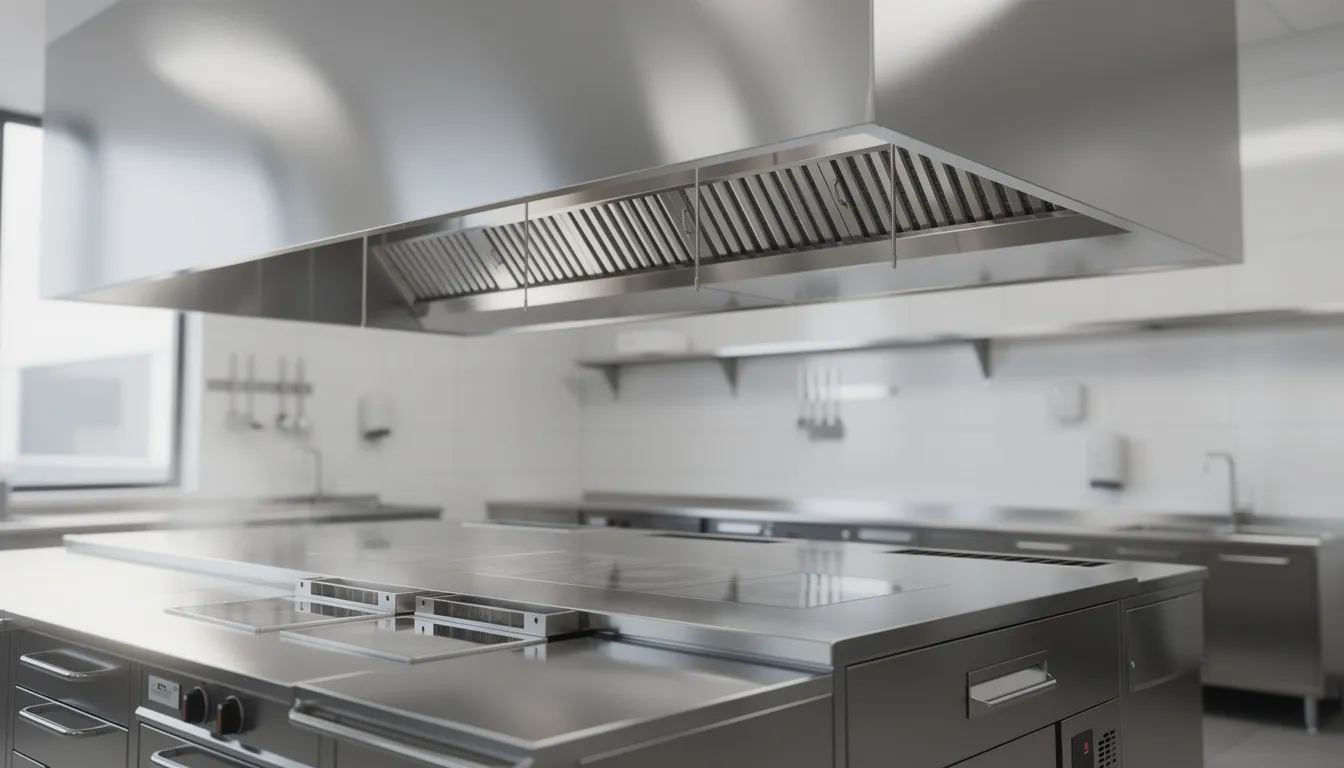
Grease accumulates inside kitchen hoods faster than most operators expect. Every time a burner fires, airborne fat particles rise with the steam and coat the interior surfaces of the hood canopy, filters, and ductwork. Over weeks and months, that thin film thickens into a dense, flammable layer. A single spark or a momentary flare-up can ignite that grease and send fire racing through the duct system before a suppression system has time to respond — a scenario that has caused serious commercial kitchen fires across the region.
Regular kitchen hood cleaning removes that fuel source before it becomes a liability. Beyond fire risk, a grease-clogged hood loses its ability to capture cooking vapours efficiently. Smoke, carbon monoxide, and airborne contaminants that should be exhausted outside instead recirculate through the kitchen, degrading air quality for staff and, in open-kitchen layouts, for diners as well.
Dubai's food-safety and civil-defence regulations require commercial kitchens to maintain exhaust systems in a clean, serviceable condition. Inspectors look for evidence of routine servicing, and a failure to produce cleaning records can result in fines or temporary closure. Staying compliant means treating hood maintenance as a scheduled task rather than a reactive one — the same disciplined approach applied to Sprinkler and drip system servicing, where deferred attention to a small fault can escalate into a much larger problem. Proactive cleaning protects your team, your premises, and your operating licence simultaneously.
Our Kitchen Hood Cleaning Process
Effective hood and exhaust cleaning follows a structured sequence that protects your kitchen, your staff, and your equipment. Our technicians arrive with purpose-built degreasers, high-pressure steam tools, and food-safe cleaning agents that cut through carbonised grease without leaving harmful residues behind.
- Initial inspection and protection: Before any cleaning begins, surrounding surfaces, cooking equipment, and floors are covered to contain loosened grease and debris. This step also lets the technician assess duct length, fan condition, and filter type so the right tools are selected from the start.
- Hood and canopy degreasing: A commercial-grade alkaline degreaser is applied to the interior and exterior canopy surfaces. Dwell time is adjusted based on grease thickness — light buildup may need five minutes, while heavy carbonised layers require longer soaking before agitation.
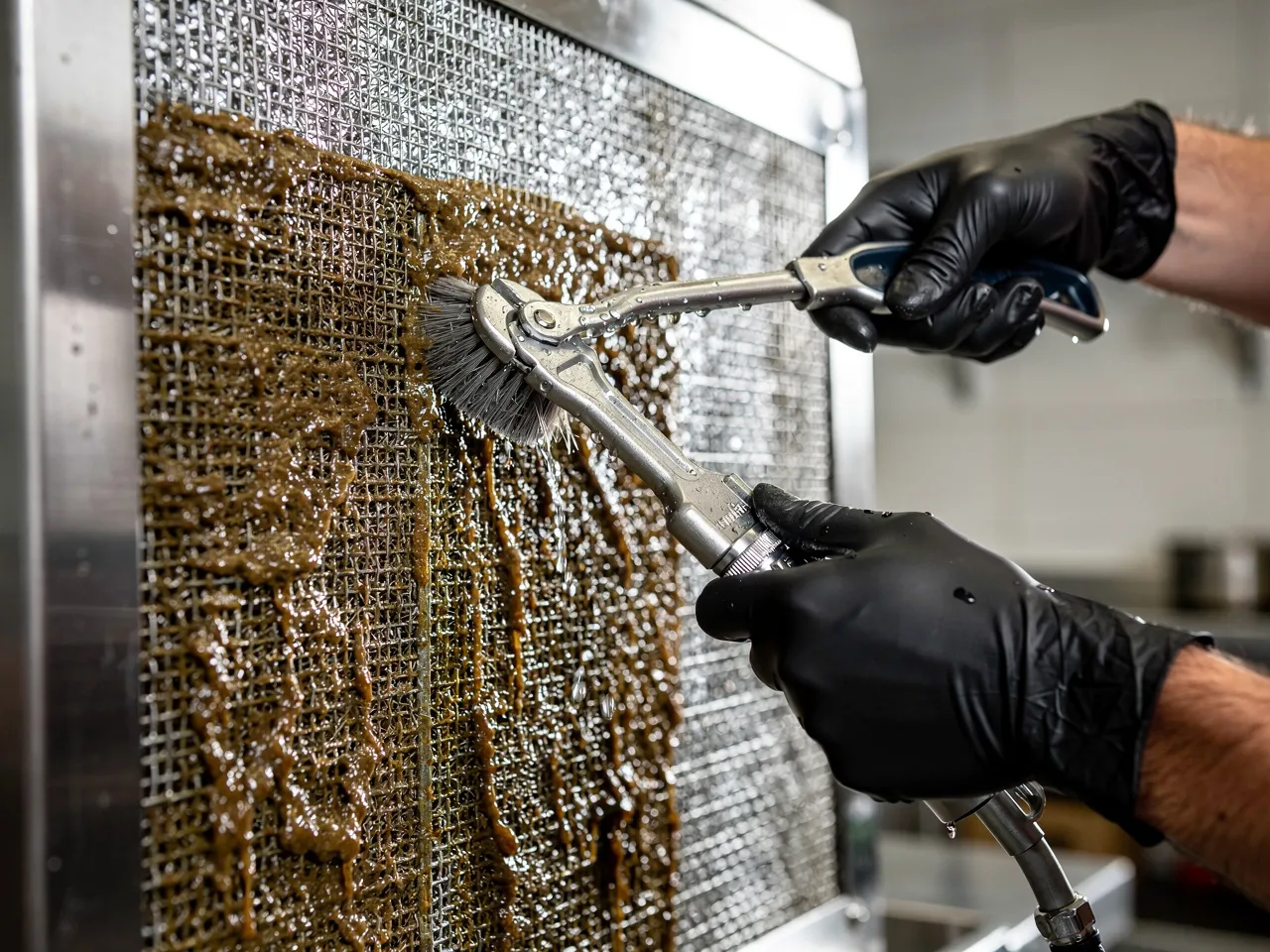
- Filter removal and deep cleaning: Baffle and mesh filters are removed, soaked in a degreasing solution, scrubbed mechanically, and rinsed thoroughly. Filters are inspected for damage and reinstalled only when fully clean and dry.
- Exhaust fan servicing: Fan blades, motor housing, and the fan plenum are wiped down and degreased. Accumulated grease on fan blades reduces airflow efficiency and adds unnecessary load to the motor, so this step directly extends equipment life.
- Ductwork cleaning: Flexible brushes and vacuum extraction tools are used to clear grease deposits from duct interiors. This is the step most often skipped by general cleaners — yet duct grease is the primary fuel source in kitchen fire incidents.
- Final rinse and surface restoration: All cleaned components are rinsed, dried, and polished where applicable. As part of broader Building maintenance and facility services, this final stage ensures the hood system is returned to a hygienic, fully operational condition with no cleaning agent residue left on food-contact-adjacent surfaces.
- Documentation and sign-off: A service record noting the date, technician, components cleaned, and any flagged issues is provided. This record supports compliance checks and helps schedule the next preventive visit at the right interval.
Every stage uses eco-conscious solutions chosen to be effective on heavy grease while remaining safe for kitchen environments. The goal is spotless results that hold up between service visits — not a surface clean that masks deeper buildup.
Target Areas We Clean
A thorough hood cleaning service covers far more than the visible canopy above your stove. Grease migrates through an interconnected system of components, and leaving any one of them untreated undermines the safety and hygiene of the entire kitchen. Our technicians apply Corrective, preventive, and emergency maintenance thinking to every job — meaning we assess the full system before work begins, address existing buildup, and flag anything that could cause problems between scheduled visits.
- Exhaust hoods and canopies: The inner surfaces, baffles, and outer casing are hand-scrubbed and degreased to remove carbonised residue that accumulates during high-heat cooking.
- Grease filters: Mesh and baffle filters are removed, soaked in commercial-grade degreasing solution, and rinsed until airflow is fully restored. Damaged filters are flagged for replacement.
- Ductwork and plenum chambers: Duct interiors are inspected with lighting equipment and cleaned along their full accessible length, eliminating the hidden grease deposits most responsible for kitchen fires.
- Exhaust fans and motors: Fan blades, housings, and motor casings are wiped down and checked for grease-related drag that reduces extraction efficiency over time.
- Surrounding surfaces: Splashbacks, wall tiles, and the top surfaces of cooking equipment directly beneath the hood are wiped clean as part of every service visit.
Knowing exactly which components have been serviced — and which require follow-up — gives kitchen managers a clear record for compliance inspections and insurance purposes.
Benefits of Professional Hood Cleaning
Investing in professional exhaust hood maintenance delivers measurable advantages that go well beyond a visually clean kitchen. Whether you operate a busy restaurant or manage a residential and commercial cleaning programme across multiple properties, the returns are practical and immediate.
- Reduced fire risk: Grease accumulates quickly on hood surfaces, filters, and ductwork. A thorough professional clean removes the fuel that allows grease fires to ignite and spread, protecting staff, guests, and the building itself.
- Improved air quality and ventilation: Clogged filters force exhaust fans to work harder and move less air. After a deep clean, airflow returns to designed capacity, keeping cooking fumes, heat, and odours out of the kitchen environment.
- Extended equipment lifespan: Motors and fans that run under heavy grease load overheat and wear faster. Regular professional attention reduces mechanical stress, delaying costly component replacements.
- Stronger kitchen hygiene: Grease residue attracts contaminants and creates surfaces where bacteria can thrive. Removing that residue completely supports the food-safe environment that health inspectors expect to find.
- Regulatory compliance: Dubai municipality and civil defence guidelines set clear standards for commercial kitchen exhaust systems. Documented professional cleaning helps operators demonstrate compliance during inspections and insurance reviews.
- Consistent operational performance: A clean system runs quietly and efficiently, reducing energy consumption and avoiding unplanned downtime during service hours.
Quality workmanship and reliable care in hood maintenance means problems are caught early rather than after they become expensive emergencies, keeping your kitchen running safely every day.
Who Needs Kitchen Hood Cleaning?
Any kitchen that produces heat, smoke, or cooking vapors on a regular basis accumulates grease faster than most operators expect. The following businesses and settings benefit most from scheduled hood and exhaust cleaning:
- Restaurants and casual dining outlets — High-volume cooking means grease layers form within weeks, not months. Frequent service intervals keep fire risk low and ventilation efficient.
- Cafes and bakeries — Even lighter cooking environments generate airborne oils and flour dust that coat filters and fan blades over time.
- Hotels and resort kitchens — Multiple cooking stations running simultaneously demand a structured cleaning program that fits within tight operational windows.
- Catering companies and event kitchens — Seasonal surges in cooking activity can accelerate buildup, making pre- and post-event cleaning a practical necessity.
- Staff canteens and institutional kitchens — Schools, hospitals, and corporate facilities serving large numbers of people face the same compliance obligations as commercial restaurants.
- Newly fitted or renovated kitchens — Deep and post-construction cleaning removes construction dust, adhesive residues, and debris from ductwork and hood interiors before the first service begins, protecting equipment from day one.
Residential and commercial cleaning needs differ in scale, but the underlying principle is the same: grease and particulate buildup inside a hood system is a hazard regardless of kitchen size. Whether you operate a single-unit café or a multi-kitchen hotel property, a consistent cleaning schedule protects staff, guests, and the equipment itself.
Scheduled Maintenance vs. Emergency Cleaning
Choosing between a regular cleaning schedule and reactive emergency service is one of the most practical decisions a commercial kitchen operator can make. Grease accumulates gradually inside exhaust hoods, ductwork, and fans — and by the time a visible problem appears, the buildup has often already created a fire risk or ventilation failure. A planned maintenance calendar keeps that cycle under control before it reaches a critical point.
Scheduled hood cleaning intervals are typically set based on cooking volume and menu type. High-output kitchens using solid fuels or heavy frying may require monthly attention, while lighter-use facilities can often operate safely on a quarterly cycle. Locking in a recurring visit means technicians can track grease accumulation trends over time, flag early wear on fan motors or filters, and adjust frequency if cooking patterns change. This approach aligns directly with Corrective, preventive, and emergency maintenance principles — addressing small issues before they escalate into costly shutdowns.
Emergency cleaning, by contrast, is reactive. It is called in after an unexpected grease fire incident, a failed health inspection, or a sudden drop in ventilation performance. While the service resolves the immediate problem, it typically costs more, disrupts kitchen operations at the worst possible time, and cannot undo any damage already caused. Facilities that rely solely on emergency response also tend to accumulate compliance gaps that compound over time.
A well-structured maintenance programme integrates hood cleaning within a broader scope of Building maintenance and facility services, sitting alongside tasks such as Floor polishing and restoration, filter replacements, and equipment checks. Bundling these services under one scheduled visit reduces downtime and keeps the entire facility operating to a consistent standard. Teams that handle Residential and commercial cleaning alongside technical maintenance can coordinate access efficiently, minimising disruption to kitchen staff and service hours.
If your kitchen currently has no documented cleaning schedule, the practical first step is an assessment visit to measure existing grease levels and establish a realistic baseline interval. From that point, preventive visits replace guesswork with a clear, repeatable process — and emergency call-outs become the exception rather than the norm.
Why Choose Our Dubai Kitchen Hood Cleaning Service
Selecting the right provider for exhaust hood and ductwork cleaning in Dubai means looking beyond a simple price quote. You need a team that brings structured processes, proper equipment, and a genuine understanding of how commercial kitchens operate under local health and safety expectations.
Our technicians are trained across a broad range of Building maintenance and facility services, which means they approach every job with the same discipline applied to Corrective, preventive, and emergency maintenance across different property types. That cross-trained expertise translates directly into faster diagnosis of grease accumulation problems and more thorough cleaning outcomes on every visit.
We serve both Residential and commercial cleaning clients, so whether you manage a single villa kitchen or a high-volume hotel kitchen, our team scales the scope of work to match your actual usage patterns and risk level. Our broader service portfolio also includes Deep and post-construction cleaning, Floor polishing and restoration, and even Irrigation system inspection, troubleshooting, and maintenance alongside Sprinkler and drip system servicing — meaning you can consolidate multiple property care needs with one reliable provider rather than coordinating several separate contractors.
Practically, this matters because a provider familiar with integrated facility care understands how kitchen ventilation performance connects to overall building air quality and fire suppression readiness. Our commitment is straightforward: Quality Workmanship. Reliable Care. — applied consistently from the first filter removal to the final inspection check before we leave your kitchen ready for service.
- Structured cleaning protocols matched to your kitchen's cooking volume
- Eco-friendly degreasers that protect stainless steel surfaces and filter media
- Detailed service records provided after every visit to support compliance documentation
- Flexible scheduling to avoid disruption during peak kitchen hours
- Transparent scope of work discussed before any job begins
If you are ready to move forward or simply want to compare what a thorough hood cleaning scope looks like for your specific setup, reach out and Request a Kitchen Hood Cleaning Consultation today.
Ready when you are
Request a Kitchen Hood Cleaning Consultation!